
Understand the two systems
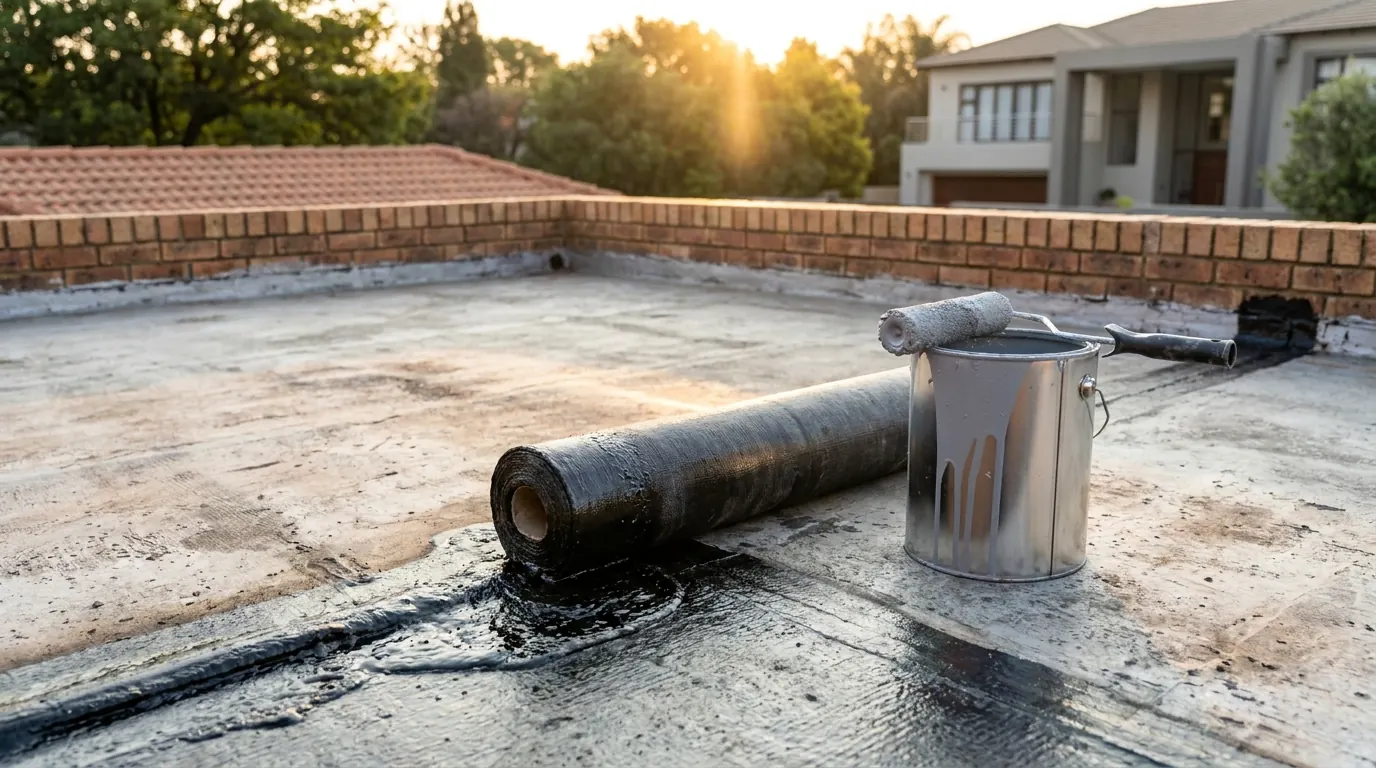
Torch-on typically uses a bituminous sheet membrane bonded with heat. Liquid-applied systems cure into a membrane on the prepared surface. The term “liquid waterproofing” covers different chemistries and specifications; it is not one interchangeable product.
Ask for the named system and its technical data sheet. The specification should establish compatible substrates, primer, reinforcement, thickness, exposure limits and whether a protective finish is needed.
Liquid systems can suit complex shapes, while sheet systems offer a manufactured membrane thickness. Neither advantage makes one system suitable for every roof.
Inspect the roof before choosing
- Substrate: condition, moisture and compatibility with existing coatings.
- Movement: joints and cracks that need the correct detail.
- Drainage: outlets, falls and standing water.
- Junctions: parapets, upstands, penetrations and terminations.
- Use: foot traffic, maintenance access and equipment on the roof.
- Application: weather window, access and protection of the building.
Sika’s product guidance illustrates why the named system matters: substrate strength, dryness, preparation, primer and temperature limits are specified for the product. Do not transfer one product’s limits to all liquid coatings.
Where heat is used, the contractor must plan suitable fire controls. Cold application still needs product-specific handling and curing arrangements.
Compare complete prices
Use the waterproofing price guide for planning ranges, then compare the complete specified systems. Torch-on and liquid systems are not equivalent specifications by default.
A useful comparison includes removal of failed material, repairs, drying, primer, membrane, reinforcement, edge details, outlets, protection and access. Ask whether quoted area is the horizontal roof only or includes upstands and other details.
Do not add a generic preparation allowance to a package that already includes it. Conversely, a low membrane-only rate does not represent a finished watertight roof. Obtain the full measured scope and total including applicable VAT.
What belongs in the handover
- Product names, batch records where available and completed system specification.
- Photos of preparation and details before they are covered.
- Application and inspection records appropriate to the system.
- Written warranty, exclusions and maintenance requirements.
- Safe access instructions and a drainage inspection schedule.
Ask who is responsible if the leak returns and whether the warranty is from the installer, manufacturer or both. For damp rising through a wall, see damp assessment; a roof membrane comparison does not diagnose that problem.
Sources and further reading
Use the instructions for your equipment or coating. Prices in this guide are indicative planning estimates, not a quote from The Home Crew.
Roof waterproofing
Tell us your suburb, the work needed and any access restrictions. Photos help us assess the next step.
View service and guide prices