
The Home Crew · Northern Johannesburg
Waterproofing in northern Johannesburg
Waterproofing assessment and repairs for flat roofs, balconies and showers across our Johannesburg service area. The surface, drainage and existing system determine the preparation and treatment required.
What waterproofing costs
| Torch-on membrane, supply and installspecified modified-bitumen system; preparation and details must be confirmed | R200–R400/m² |
|---|---|
| Flat concrete roof, liquid system | R295–R480/m² |
| Tiled or pitched roofusually detail repair, not full membrane | R125–R230/m² |
| Metal roof | R95–R220/m² |
| Bitumen spray-on | R300–R500/m² |
| Polyurethane liquid | R350–R550/m² |
| Liquid rubber | R150–R300/m² |
| Cementitious coatingonly where the surface is rigid and sound | R100–R200/m² |
| Shower or bathroom sealingfull bathroom 5–8 m² runs R3,500–R6,000 | from R1,800 |
| Prep per jobonly where excluded from the membrane package; avoid counting preparation twice | R1,500–R4,000 |
| Emergency call-out | +R500–R1,000 |
| Membrane material onlyexample 4 mm roll, 10 m x 1 m; installation and effective coverage confirmed separately | R700–R1,200 per roll |
These are market-sourced guide ranges, not closed quotes. The firm number depends on the condition of the slab, how much old membrane has to come off, and how many metres of edge your roof carries. A WhatsApp photo of the leak or the roof usually gets you a ball-park the same day, and the final price is confirmed on site before we book the day. See the review date in the guide above.
Torch-on or a liquid system
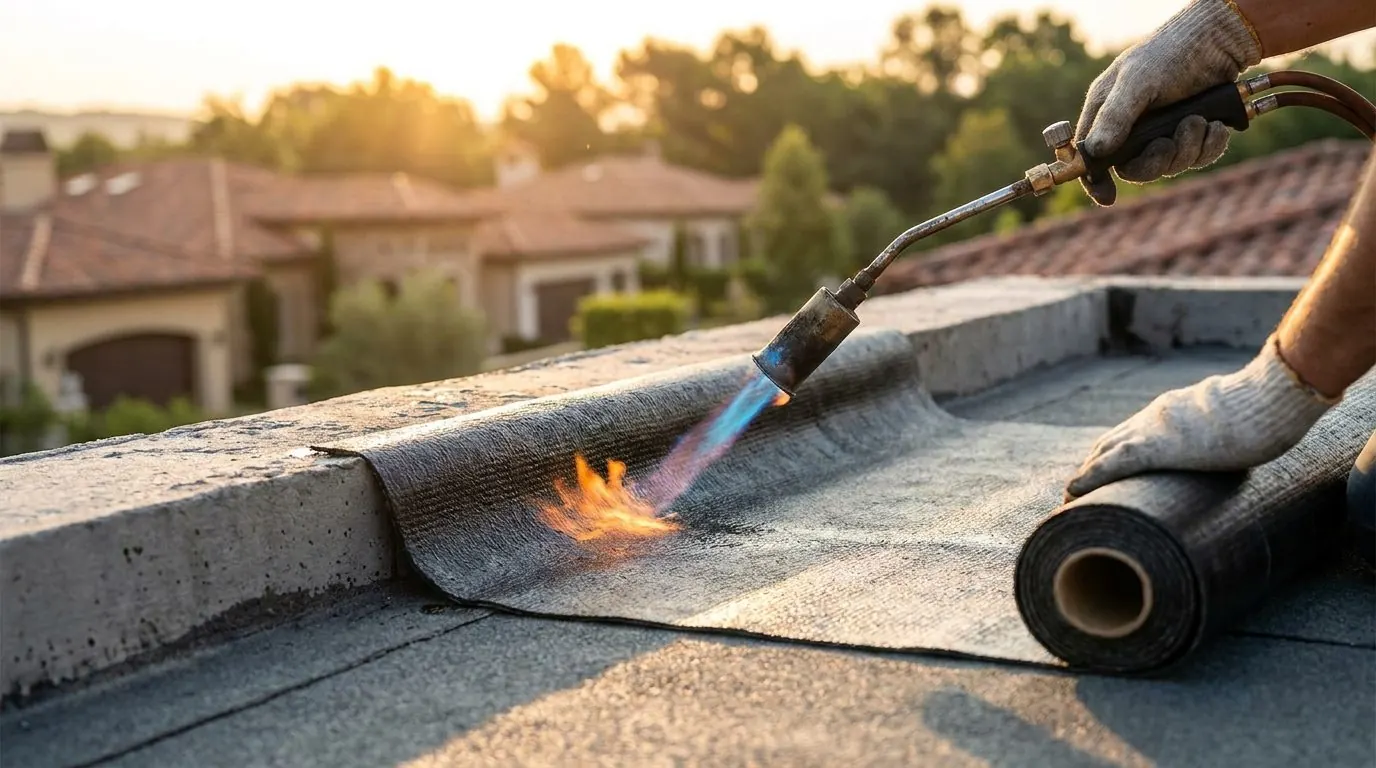
Torch-on modified-bitumen membrane is one option for suitable flat concrete roofs. Its use depends on the substrate, detailing, drainage and safe application conditions. The quote should name the system and preparation rather than promise a universal lifespan.
Liquid-applied systems can suit some balconies and detailed surfaces where roll membranes are difficult to fit. Compatibility, reinforcement, thickness and curing requirements are product-specific; a seamless finish still needs correctly formed joints and terminations.
Cementitious products vary in flexibility and intended use. Select the system for the substrate, movement and water exposure rather than choosing solely on the square-metre price.
Why the fall comes before the membrane
A membrane can be fully waterproof and still fail on a flat roof with no fall, because water that cannot leave the roof sits on it. Water standing on bitumen year-round breaks it down from the top, and the pond grows a little deeper each season until it finds the weak point, which is usually a seam or an upstand that was never designed to sit under water. No membrane fixes a roof that water cannot leave.
That is why the first thing we check is not the membrane at all; it is the fall of the slab and the outlets. Water has to be able to reach an outlet and leave the roof before anything gets sealed. If the fall is wrong or the outlets are blocked or too few, that goes into the quote first, because membrane over a ponding slab is money spent twice.
Where waterproofing fails: the upstand and the detail
Edges, upstands, joints, outlets and penetrations deserve careful inspection alongside the main membrane surface. Water can travel before it becomes visible indoors, so the damp patch may not sit directly below the defect.
It is also why we price the edges and details by the metre, not just the square metres of field. The field is the cheap part of the job: the upstands, corners, outlet collars and pipe penetrations are where the hours and the waterproofing actually go.
Balconies, showers and wet areas
Balconies are priced on detail metres rather than square metres of field, because a balcony carries more edge per square metre than any roof: door thresholds, upstands on three sides, outlet collars and corners, all in a space small enough that one weak detail is a large share of the whole job. A liquid system is often the better fit there: seamless over tiles and detail-heavy where a roll has to be cut into pieces.
Shower and bathroom quotes depend on access to the waterproofing layer, drain connections and the condition beneath the tiles. Plumbing leaks and moisture entering from elsewhere must also be considered. If the source is unclear, arrange a moisture assessment before specifying a membrane or damp treatment.
The products available in South Africa
The membrane type and thickness must suit the roof and the selected manufacturer system. Ask for the product name, coverage, reinforcement and protection requirements in the quote; roll thickness alone does not establish suitability or service life.
We name the exact system and thickness in your quote, and the membrane itself carries the manufacturer’s warranty (theirs, not ours), and we put that distinction in writing rather than claiming their guarantee as our own.
Choosing a liquid waterproofing system
Liquid-applied waterproofing ranges from local repair coatings to complete specified systems. The product must be suitable for the substrate and exposure, with the required preparation, reinforcement and application thickness.
A coating over loose or failed material does not resolve the underlying defect. Ask which existing layers must be removed and whether drainage or structural movement needs correction before a new system is installed.
The red flags on any waterproofing quote: square metres of field priced with no mention of upstands or edge metres, no plan for the outlets and the fall, and a guarantee that does not separate workmanship from the manufacturer’s system warranty. If the quote does not say what happens to the water, it is not a waterproofing quote.
What a proper torch-on job includes
Before any membrane goes down, the fall of the slab and the outlets are checked and cleared: water has to be able to leave the roof before anything seals it. Old membrane that has let go comes off, and the surface is primed. The upstands and details are done, not just the field: parapets, corners, outlet collars and pipe penetrations. Seams are torched and checked. Where the structure allows it, the finished job gets a water test (outlets closed, water poured on and left to stand, then released) so you see it hold before we pack up.
You get photos of the completed detail work, and a 6-month workmanship guarantee. Workmanship only: the membrane system carries the manufacturer’s warranty, which is theirs, and we say so in writing on the quote.
How the job runs
You WhatsApp a photo of the leak, the damp patch or the roof, and we quote from it, usually a ball-park the same day, and a firm number once we have seen the surface, because the condition of the slab and the metres of edge are what actually set the price. An active leak where water is coming in now gets priority. On the day, the crew preps, membranes and checks the details, then water-tests the finished job where the structure allows it before packing up.
Before we leave you get the job in plain terms: what was removed, what went down, which details were done, whether the water test passed, and anything we found that needs attention later. Photos of the completed detail work go with the invoice.
Waterproofing alongside other roof work
A leaking roof is not always a waterproofing problem. Valleys, ridges, flashings and cracked tiles fail before any membrane does; those are roof repairs, and fixing the actual fault costs less than waterproofing over it. Once a membrane or roof is sound, roof painting with the right coating is what protects it from the highveld sun. And if the water damage you are chasing is at the base of your walls (bubbling paint, tide marks, that smell), start with damp proofing instead, because a wall damp from the ground up is a different job. Gutters matter here too: a run that overflows every storm soaks the same wall on its way down, so a gutter clean is often part of stopping the water.
Where we waterproof
Coverage includes Sandton, Fourways and Randburg, plus everywhere else we work across the service area. Flat-concrete-roof townhouse complexes and cluster estates are the bulk of the torch-on work; freestanding homes call more for balconies, showers and the detail repairs that stop a leak before it needs a membrane. To confirm a price for your roof, send us the details or call.
Questions we get asked
How much does waterproofing cost per m² in South Africa?
The guide separates waterproofing systems and preparation. Substrate, drainage, detailing, measured area and required repairs determine the quote. Preparation is added only where it is not already included in the selected scope.
What is the strongest waterproofing?
For flat concrete roofs, torch-on modified-bitumen membrane: it carries the 10–15-year system lifespan and handles standing water better than any brush-on product. For showers and wet interiors, a seamless liquid system is usually the stronger fit because it has no seams or lap joints in a small, detailed space. Strongest depends on the surface and the details, and we name which and why in the quote.
Which company is best for waterproofing?
Judge the quote, not the name. A waterproofing quote worth accepting itemises the prep, prices the edges and upstands as well as the field, names the membrane system and thickness, says what happens to the outlets and the fall, and separates the workmanship guarantee from the manufacturer's warranty. A quote that prices only square metres of flat surface is pricing the wrong thing.
What are the best waterproofing products available in South Africa?
The correct system depends on the substrate, movement, exposure, drainage and existing coating. Ask for the named product system, compatible primer, detailing method and manufacturer installation requirements in the quote; no single product suits every roof or wet area.
How long does waterproofing last?
Lifespan depends on the specified system, substrate, application, drainage, exposure and maintenance. Ask for the product documentation and applicable warranty rather than relying on a universal number of years.
Is the work guaranteed?
Yes: 6 months on workmanship, and we say in writing that it covers workmanship only. The membrane system itself carries the manufacturer's warranty, which is theirs, not ours, and that distinction is on the quote so you know exactly who guarantees what.
Before you book
Ask the quote to cover drainage, outlets, edges and upstands as well as the main surface. A coating alone may not solve movement, poor falls or a failed underlying system.
Scope in detail
Illustrated comparison
A membrane repair at the roof-to-wall junction, keeping the existing drainage opening clear.
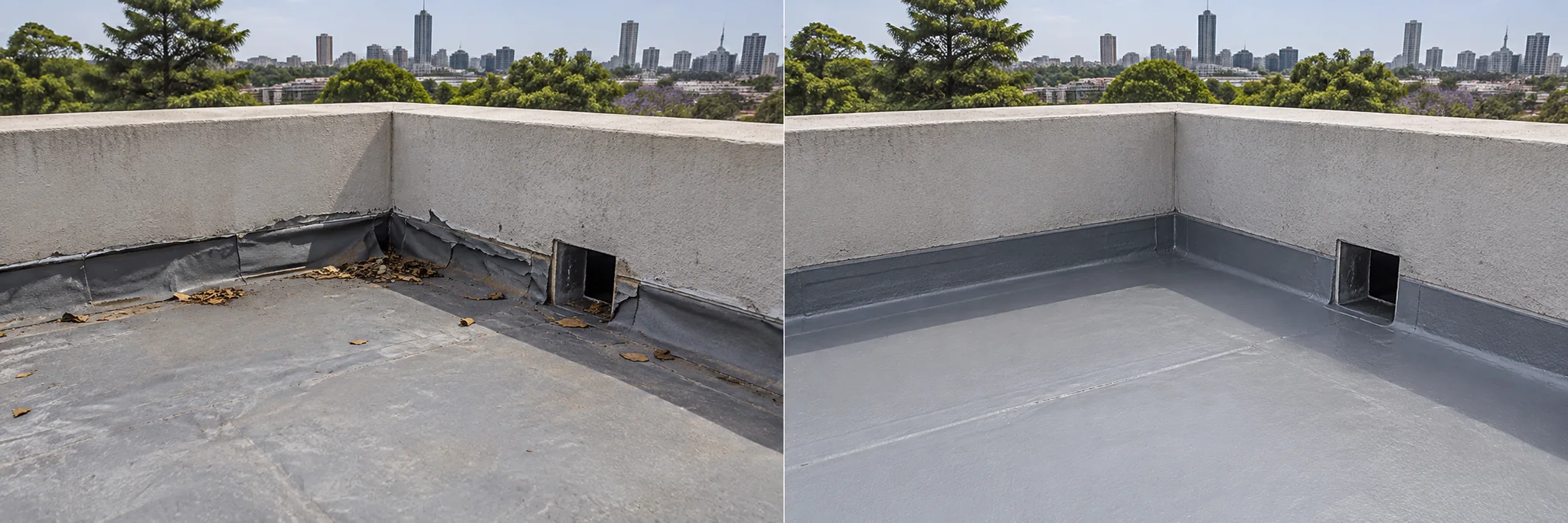
Generated illustrations explain the work shown. They are not photographs of completed customer jobs.
Waterproofing in your area
Find local service details, scope and guide prices.
Planning waterproofing in northern Johannesburg? Send photos, your suburb and the work you need.
Have your suburb, a short job list and photos ready.