
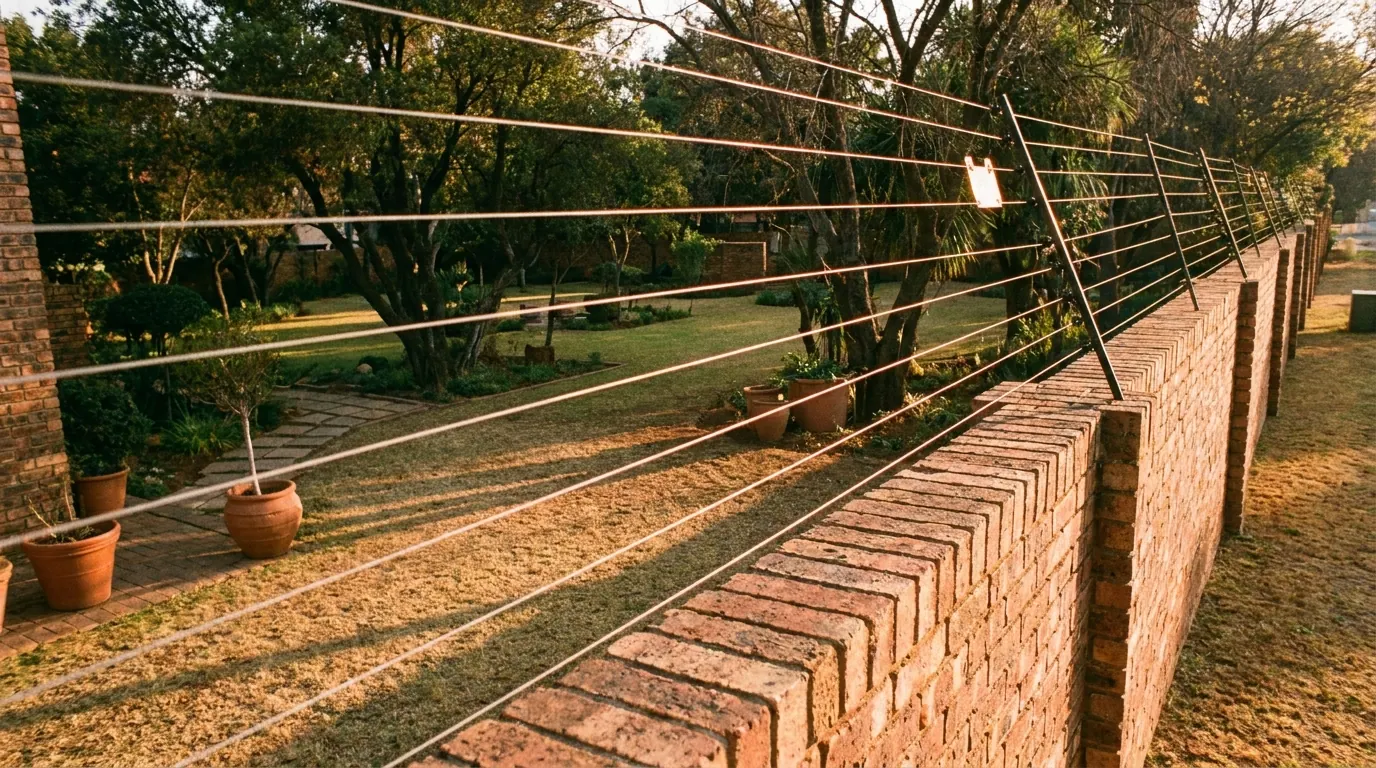
The monthly visual check
Inspect from a safe distance without touching wires or climbing the boundary. Note the date, location and a photo of each visible defect.
- Branches or vegetation close to the fence.
- Broken or sagging wires, damaged insulators and leaning brackets.
- Visible storm or impact damage.
- Missing or unreadable warning signs.
- Energiser fault indications, persistent alarms or loss of mains supply.
Arrange competent help for work near the fence. Switching off one device does not establish that every conductor is safe, especially on a shared boundary or multi-zone installation.
What a technician should test
Ask for the energiser model, fault location and measured test results on the job sheet. The inspection should assess the fence circuit, earthing, connections, insulation, battery backup and alarm interface as applicable to that installation.
Battery terminal voltage and fence pulse voltage are different measurements. A general-purpose multimeter is not a substitute for specified fence test equipment. A normal battery reading at rest also does not prove useful backup capacity.
After a storm, report lightning or impact damage and whether other electrical equipment was affected. Do not assume a failed energiser from an alarm message alone.
Keep certification separate from routine visits
South Africa’s Electrical Machinery Regulations address electric fence system certification. Ask a registered electric fence system installer to establish the requirements for your installation, particularly for alterations and ownership changes, and keep the certificate with the property records.
A monthly service visit is not itself a new certificate. Avoid treating the certificate as an automatically annual renewal or assuming that an equipment training course alone establishes the installer’s registration. Verify the person issuing the certificate and the installation it covers.
Budget and contract scope
Use the electric fence repair price guide for diagnostic visits, energiser repairs and replacement units. Confirm the model, attendance fee, VAT and any separate wiring or earthing work.
A recurring contract should specify inspected zones, tests, record keeping, vegetation responsibilities and fault response hours. Agree an approval limit before additional parts are fitted. Certification, after-hours attendance and storm damage should each have a clear inclusion or exclusion.
For a complex, keep one responsible contact, an access plan and a record of changes. Avoid publishing alarm codes or detailed security layouts in an enquiry.
Sources and further reading
- South African Government: Electrical Machinery Regulations, 2011 (PDF)
- Nemtek: installer training and certification courses
Use the instructions for your equipment or coating. Prices in this guide are indicative planning estimates, not a quote from The Home Crew.
Electric fence maintenance and repairs
Tell us your suburb, the work needed and any access restrictions. Photos help us assess the next step.
View service and guide prices